
Register Contact For patients
Coloplast Professional
  • Stoma

    E-learning

    E-learning

    Webinars on-demand

    Webinars on-demand

    Videos

    Prevention Guide

    Mentorship Programme

    Mentorship Programme

    Knowledge hub

    Apollo Paediatric ostomy Foundations in Motivational Interviewing

    Short reads

    Short reads

    Articles and Publications

    Articles and Publications

    Validated Tools

    Validated Tools

    Event calendar

    Event calendar

    Webinars

    Webinars

    Face to Face Events

    Face to Face Events

    Podcasts

    Podcasts

    All resources

    All resources

    Fit tool

    Fit tool

    Patient resources

    Educational Videos Instructional Videos

    Coloplast Charter

    Coloplast Charter

    All Ostomy Products

    All Ostomy Products

    SenSura Mio

    SenSura® Mio Concave SenSura® Mio in Black

    Supporting Products

    Heylo Brava Protective Seal
  • Bladder

    E-learning

    E-learning

    Webinars on-demand

    Webinars on-demand

    Podcasts

    Podcasts

    UTI Risk Factors Model

    UTI Risk Factors Model

    Short reads

    Short reads

    Articles and Publications

    Articles and Publications

    Validated Tools

    Validated Tools

    Neurogenic

    Neurogenic

    Event calendar

    Event calendar

    Webinars

    Webinars

    Face to Face Events

    Face to Face Events

    Patient assessment

    Patient assessment

    Patient resources

    Educational videos Instructional Videos

    Coloplast Charter

    Register an IC Patient Urine Drainage Patient Registration Coloplast Charter

    All Bladder Products

    All Bladder Products

    Luja

    Luja Female Luja Male
  • Bowel

    E-learning

    E-learning

    Webinars on-demand

    Webinars on-demand

    Podcasts

    Podcasts

    Knowledge hub

    LARS MENTOR Tool Foundations in Motivational Interviewing

    Articles and Publications

    Articles and Publications

    Validated Tools

    Validated Tools

    Tai Treatment Guide

    Tai Treatment Guide

    Event calendar

    Event calendar

    Webinars

    Webinars

    Face to Face Events

    Face to Face Events

    Patient services

    Patient services

    Peristeen® - Registering patients to Charter or Referring to the

    Peristeen® - Registering patients to Charter or Referring to the Coloplast Nursing Service

    All Bowel Products

    All Bowel Products

    Peristeen

    Peristeen® Light Peristeen Light Portfolio Peristeen Plus
  • Wound

    E-learning

    E-learning

    Knowledge

    Everything you need to know about wound care Wound preparation Wound assessment Wound healing Exudate management Wound types Infection and biofilm

    Podcasts

    Podcasts

    Patient cases

    Patient cases

    Clinical videos

    Clinical videos

    Scientific publications

    Scientific publications

    Event calendar

    Event calendar

    Webinars

    Webinars

    Tools for professionals

    Tools for professionals

    Tools for patients

    Tools for patients

    All wound dressings

    All wound dressings

    Non-infected wounds

    Non-infected wounds

    Infected wounds

    Infected wounds

    Painful wounds

    Painful wounds

    Types of dressing

    Silicone foam dresssings Foam dressings Silver dressings Hydrocolloid dressings Contact layer dressings Gelling fiber dressings
  • Interventional Urology

    Erectile restoration

    Clinical Evidence Clinical Learning E-learning

    Male continence

    Clinical Evidence Clinical Learning E-learning

    Female Continence

    Clinical Evidence Clinical Learning E-learning

    Pelvic Floor Reconstruction

    Clinical Evidence Clinical Learning E-learning

    Stone Management

    Clinical Evidence Clinical Learning E-learning

    Soft Tissue Management

    Clinical Evidence Clinical Learning E-learning

    BPH

    Clinical Evidence Clinical Learning E-learning

    Upcoming Events
Log in
Coloplast Professional
New Mobile navigation Shopping basket Shopping basket Shopping basket Print Icon Icon / delete Temp Info

This site is intended for Healthcare Professionals only. The site content is intended for informational- and educational purposes and may not be appropriate for all jurisdictions. Coloplast does not provide medical advice. Responsibility for patient care resides with the health care professional. For detailed device information on products presented, including instructions for use, contraindications, effects, precautions and warnings, please consult the product’s Instructions for Use (IFU) prior to use.

Yes, I am a health care professional No, I am not a health care professional

There are three types of wound healing environments:

  • Dry - where the dressing absorbs, but doesn’t keep any of the moisture.
  • Moist - where the dressing absorbs and keeps some of the moisture.
  • Wet - where you seal the wound with an impermeable membrane that keeps all of the fluid within the dressing.18

Up until the 1960s, the most common approach to wound healing was to create a dry wound environment. Healthcare professionals either left the wound uncovered to allow it to dry, or they covered the wound with a dry gauze dressing.7

However, around that time, Dr. George D. Winter discovered something interesting. Superficial acute wounds healed twice as fast in a moist environment than under a dry scab.9  Since Dr. Winter’s discovery, clinical research has demonstrated that moist and wet dressings are far more effective than dry dressings in helping chronic wounds heal.10

Moist wound healing:

  • prevents tissue dehydration and cell death18;
  • reduces the risk of wound infection12,19;
  • results in less scar tissue19; and
  • speeds up angiogenesis and epithelisation 18.

Did you know?

Research shows that using moist wound healing dressings is far more cost-effective than traditional gauze-type dressings.20

Why do moist wounds heal faster?

The main reason why moist wounds heal faster is that epithelial cells migrate faster in a moist environment.

In the final stages of wound healing, epithelial cells migrate across the surface of the wound to close it5,6. These cells need moisture to move across the surface of the wound. If the wound environment is dry, the cells will have to find moisture deep in the wound bed so that they can migrate. This slows down the healing process.7 In fact, studies show that moist wounds heal 50 % faster than dry wounds.5 On the other hand, if a wound is exposed to the air, this creates a dry environment that actually promotes cell death, not healing.4

Wound exudate, or fluid, also plays a vital role in the healing process. This fluid provides the nutrients, proteins, glucose and white blood cells that are necessary for the wound to heal. For example, neutrophils, a type of white blood cell, help protect the body from harmful microorganisms. In this way, exudate actually helps prevent wound infection. 

This helps to explain why creating an optimal moisture balance around the wound is so important when managing chronic wounds.

How to create a moist wound healing environment?

One of the most important ways to create a moist wound healing environment is to choose the right type of dressing for the wound.

To find out which dressing you should choose, start by assessing the wound and the level of exudate. This assessment will give you the information you need to choose the right dressing and determine how often you need to change it.27

In general, you should look for a dressing that:

  • removes excess exudate from the wound bed;
  • protects the wound edges and periwound skin;
  • maintains a moist healing environment;
  • helps your patient feel confident and secure; and
  • is easy for the patient to remove and care for.27

Choosing a moist healing dressing also eases the burden on your patient. When you use moist wound healing, removing the dressing is less painful and traumatic than with dry dressings.18,19  You don’t have to change the dressing as often, and you improve the healing time – all of which benefits the patient.20

Keep in mind that moist wound healing is not suitable for all types of chronic wounds.

For example, you should be careful when using moist dressings on patients with gangrenous diabetic foot ulcers.15 This is because dry gangrene can progress to wet gangrene when moisture gathers under the dressing. You should also be careful if you’re using a moist dressing on a patient with a malignant fungating wound covered by a dry scab (eschar). In these cases, the scab can help to stabilise the wound.17

Moist wound healing
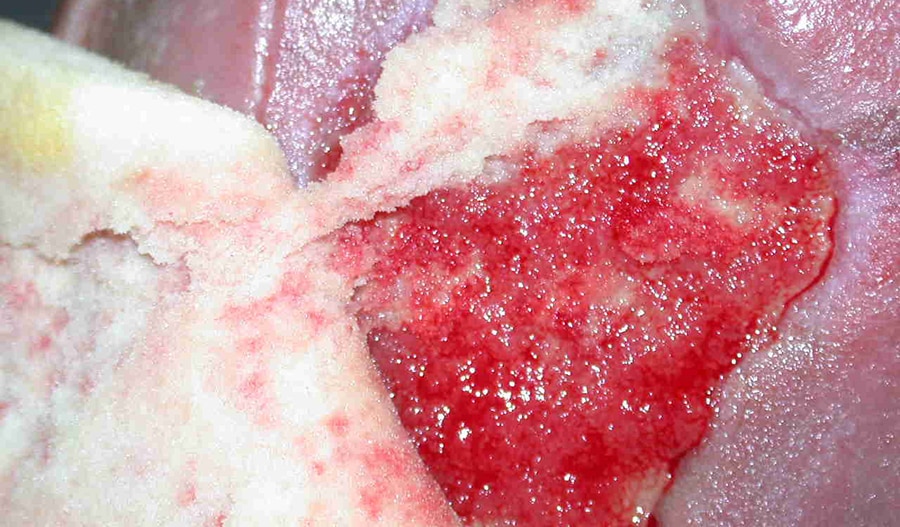
Moist Wound Healing

What about wet-to-dry dressings?

Research shows that wet-to-dry and dry adherent gauze dressings are not effective in wound healing.21 Wet-to-dry dressings debride the wound by ripping tissue from the wound’s surface.22,23 This method:

  • damages granulation tissue and causes bleeding24;
  • causes pain when removing the dressing21,22,24;
  • increases the risk of infection22;
  • spreads infection in colonised wounds during dressing change22,25; and
  • dehydrates the wound bed23.

Explore topics

Wound Healing Moist wound healing
  • The information, views and opinions expressed at this site and in the materials presented are solely those of the individuals involved and do not necessarily represent those of Coloplast A/S or its affiliates (“Coloplast”). Coloplast is not responsible and does not verify the accuracy of any of the information or material presented at the site. The information presented may not be appropriate for all jurisdictions.
    Read the full disclaimer
  • 0800 220 622
  • CProfessionalUK@coloplast.com
  • mktcoloplastiu@coloplast.com - IU contact
  • Coloplast Ltd Nene Hall, Peterborough Business Park PE2 6FXPeterborough United Kingdom
    • Cookie policy
    • Legal Aspects
    • Privacy Notice
    • Coloplast products - instructions for use
    • Modern Slavery Act
    • EU Declarations of conformity
    • Accessibility