
Get full access with a free account
Benefits of the Coloplast® Professional Educational platform
- Full access to educational content, events and resources
- Track your progress
- Share content with your colleagues
- Share supporting material with your patient
A venous leg ulcer is an open, often painful, sore in the skin on the leg below the knee. The ulcers usually develop on the inside of the leg and take more than 2 weeks to heal.
Venous leg ulcers are caused by disease or disrupted vein function, also known as chronic venous insufficiency (CVI) and ambulatory venous hypertension.
Chronic venous insufficiency usually results from damage to the valves in the leg veins (for example, varicose veins) or as a result of venous thrombosis.1
Ambulatory venous hypertension occurs in patients with varicose veins, when there is an inadequate decrease in venous pressure while walking and exercising.
What are the recurrence rates for venous leg ulcers?
Recurrence rates of leg ulcers are high and once healed there is a great risk of recurrence.
- 12 months recurrence between 26% and 69%1
- 70% recurrence in patients not fitted with compression hosiery2

Venous leg ulcer on the lower leg
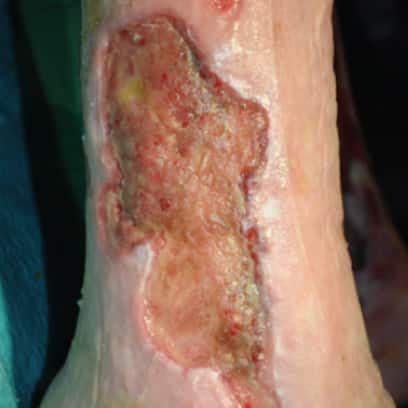
Venous leg ulcer on the lower leg
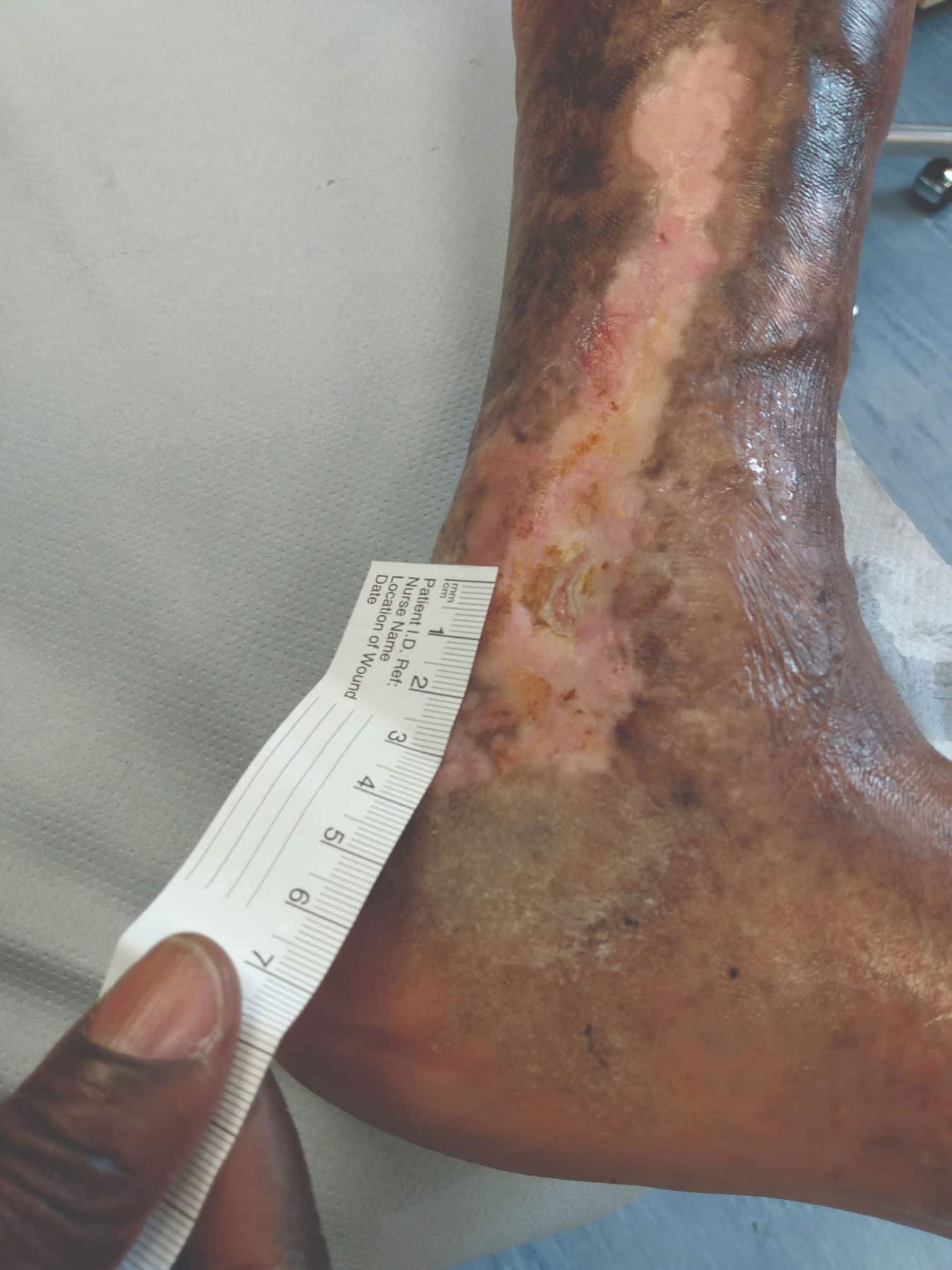
Venous leg ulcer on the lower leg
Indicators of Venous & Arterial disease
Indicators of underlying Venous disease
Significant past medical history of:
- Deep Vein Thrombosis (DVT)
- Pulmonary Embolism (PE)
- Lower limb fracture
- Family history of venous disease
- Varicose veins
Indicators of venous disease:
- Ankle flare
- Varicose veins
- Pigmentation and staining
- Lipodermatosclerosis
- Oedema
- Eczema/dry skin
- Atrophie blanche
- Pain and heavy feeling in legs
Risk factors:
Medical conditions
- Hypertension
- Chronic oedema
- Hormonal
- Arteriovenous fistula
Lifestyle
- Obesity
- Physical Inactivity
- Stress
- History of intravenous drug use
- Occupation/hobbies
- Multiple pregnancies
Indicators of underlying Arterial disease
Significant past medical history of:
- Cardiovascular problems
- Stroke
- Myocardial Infarction
- Angina
Indicators of arterial disease:
- Intermittent claudication
- Pain on leg elevation
- Cold extremities
- Discoloured toes
- Thick and slow growing toenails
- Dependent rubor
- Absent foot pulses
- Pale shiny hairless skin
- Deep and punched out ulcers
- Ulcers more common on the lateral malleolus and dorsum of the foot
Risk factors:
Medical conditions
- Hypertension
- Diabetes
- Rheumatoid Arthritis
- Hormonal
Lifestyle
- Smoking
- High cholesterol
- Obesity
- Physical Inactivity
- Stress